
Why Every Business Website Should Have a Blog: The Long-Term Benefits of Publishing Articles
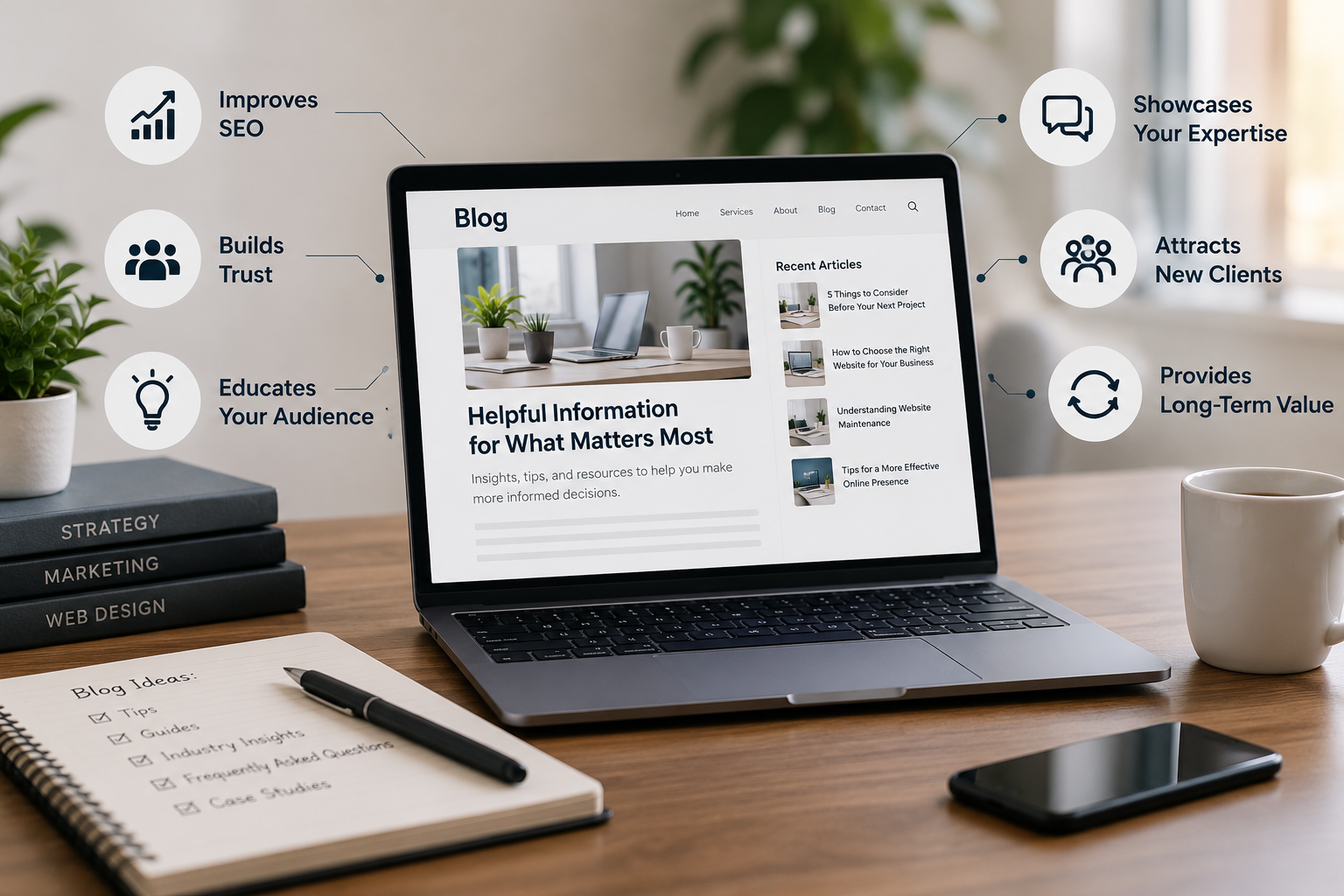
Your website is more than a place to display your services and contact information. It's an opportunity to educate your audience, demonstrate your expertise, and attract potential clients.
One of the most effective ways to accomplish this is through a regularly updated blog or articles section.
While some businesses view blogging as an unnecessary extra, publishing useful, informative content can become an important part of a long-term digital marketing strategy.
Whether you're a law firm, consultant, contractor, healthcare provider, or small business owner, maintaining an articles section can help your website work harder for your business.
1. Articles Help Improve Search Engine Visibility
Search engines rely on website content to understand what your business offers and which searches your pages may be relevant to.
Every well-written article creates an opportunity to address a specific topic or question that potential customers are searching for.
For example, a law firm might publish an article explaining what to expect during an initial consultation. A contractor could write about signs that a roof needs replacing. A financial consultant might explain common budgeting mistakes.
These articles can help your website appear in relevant searches beyond your primary service pages.
However, publishing more articles doesn't automatically guarantee higher rankings. Content should be original, accurate, useful, and written with your audience's needs in mind.
2. Blogging Establishes Expertise and Credibility
Before contacting a business, many potential clients want reassurance that they're making the right choice.
Informative articles allow you to demonstrate your knowledge before a conversation ever takes place.
By explaining industry topics, answering common questions, and sharing practical advice, your business can establish itself as a knowledgeable resource.
For professional service providers, this is particularly valuable. Prospective clients may be making important financial, legal, or personal decisions, and helpful content can make your business feel more approachable and trustworthy.
The goal isn't to overwhelm visitors with technical terminology. It's to explain complex topics in a way they can understand.
3. Articles Give Potential Clients a Reason to Visit Your Website
Most businesses have relatively static websites.
Their homepage, services, about page, and contact information may remain unchanged for months or even years.
An articles section introduces new opportunities for visitors to discover your business.
Someone who isn't ready to hire a professional today might still search for information related to your services.
If your article answers their question, they may remember your business when they eventually need assistance.
This allows your website to connect with potential clients earlier in their decision-making process.
4. Blog Content Can Continue Providing Value Over Time
Unlike a social media post that may disappear from someone's feed within hours, a useful website article can remain discoverable for months or years.
This is especially true for evergreen content—articles that address topics people consistently search for.
Examples include:
- Frequently asked questions about your services
- Step-by-step educational guides
- Common mistakes to avoid
- Explanations of industry terminology
- Tips for choosing a service provider
An article published today may continue attracting visitors long after it was written.
That doesn't mean every article will generate traffic. Its long-term value depends on search demand, competition, content quality, and ongoing relevance.
5. Articles Support Your Social Media and Email Marketing
Creating content for social media can feel like a constant challenge.
An articles section gives your business a library of information that can be repurposed across different marketing channels.
A single article can become a LinkedIn post, a series of social media tips, a newsletter feature, or a short educational video.
Instead of creating completely new material for every platform, you can use your website articles as the foundation of your content marketing strategy.
This also encourages readers to return to your website, where they can learn more about your services.
6. Blogging Creates Opportunities for Internal Linking
Internal links connect different pages within your website.
For example, an article discussing website accessibility could link to a related website design service page. An article about website performance might link to a website maintenance plan.
These connections help visitors discover additional information and make it easier to navigate your website.
They also help search engines understand how your pages relate to one another.
When used naturally, internal links can strengthen your website's overall organization while guiding visitors toward relevant services.
7. Helpful Articles Can Generate More Qualified Leads
Not every website visitor is ready to become a customer.
Some are researching a problem. Others are comparing solutions or trying to understand whether they need professional assistance.
Articles allow you to address these different stages of the decision-making process.
For example, someone searching for information about maintaining a business website may eventually realize that professional website management would save them time.
If your article provides valuable information and clearly explains the next step, that visitor may be more likely to explore your services.
A thoughtful call to action at the end of an article can encourage readers to schedule a consultation, request a quote, or learn more about your business.
8. A Blog Helps Keep Your Website Relevant
Businesses evolve, industries change, and customer questions shift over time.
An articles section provides a flexible way to address new developments without constantly redesigning your main website pages.
You can publish information about industry trends, updated recommendations, new technologies, or common customer concerns.
For industries where information changes frequently, reviewing and updating existing articles is just as important as publishing new ones.
An outdated article can create confusion, particularly when it discusses legal requirements, pricing, or technical guidance.
Maintaining accurate content helps protect the credibility you've worked to establish.
9. Quality Matters More Than Quantity
One of the most common misconceptions about blogging is that businesses need to publish constantly to see results.
In reality, a smaller collection of useful, well-organized articles can be more valuable than dozens of rushed posts.
Rather than focusing solely on publishing frequency, prioritize:
- Topics your potential customers genuinely care about
- Accurate, original information
- Clear headings and readable formatting
- Relevant internal links
- Helpful examples and practical guidance
- Periodic reviews to keep content current
A realistic publishing schedule is one your business can maintain without sacrificing quality.
For some businesses, that might mean publishing one or two thoughtful articles each month.
Final Thoughts
An articles section isn't simply a place to share company news. It's an opportunity to turn your website into a valuable resource for potential and existing customers.
Thoughtful content can improve search visibility, establish credibility, support marketing efforts, and introduce your business to people who may not have discovered it otherwise.
Most importantly, articles allow your business to provide value before asking visitors to become customers.
When approached strategically, blogging becomes more than another marketing task. It becomes a long-term investment in your website's usefulness, visibility, and growth.
Your website shouldn't just tell people what your business does. It should help them understand why your expertise matters.
Discover the latest insights and breakthroughs in this field.
Explore additional articles that provide in-depth diverse viewpoints on this topic

Why Organizing Website Content Externally Can Save Time During a Website Redesign

How New Professional Service Businesses Can Start Gaining Visibility Online